


Published on 6 March 2025
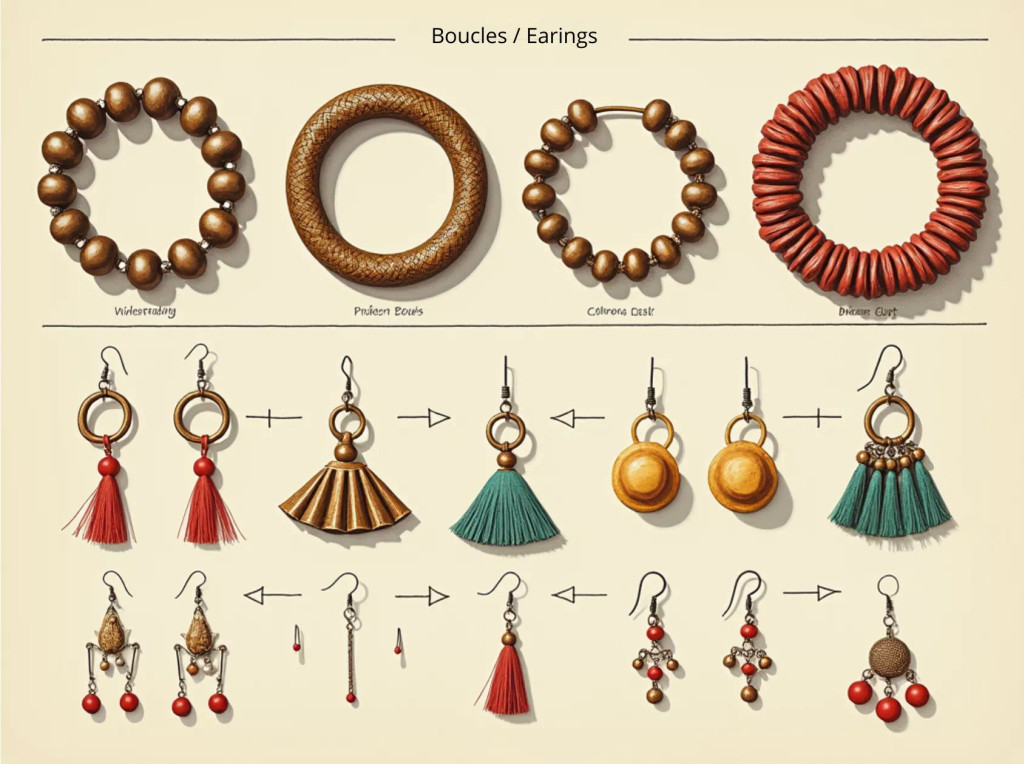
Have you ever wondered what history lies behind your earrings? This article traces the journey of these jewels, from the first civilisations to their present-day role in fashion. We explore how their function has evolved - tribal ornaments, symbols of social status, then fashionable accessories. You will see how each era has reinterpreted their form, from the drop earrings of Pharaonic Egypt to contemporary "genderless" designs. A journey that reveals as much about our societies as about the jeweller's art.
Contents
- The origins of ear ornaments
- Cultural and symbolic transformations
- From baroque to revolutions in style
- Contemporary issues and reinterpretations
- The universality of a timeless ornament
- A closer look at iconic hoops
- Perceptions and taboos across societies
The origins of ear ornaments
The emergence of the first earrings
The story of ear jewellery forms a true historical narrative. Archaeological finds show that some of the oldest metal earrings date back to around 2500 BC. These artefacts reveal rudimentary piercing techniques and the use of raw materials.
To illustrate how universal this practice is, let us look at the main civilisations that adopted ear ornaments:
- Mesopotamia: Drop jewels around 4,500 years old have been found there, evidence of an already accomplished craft.
- Ancient Egypt: Influential women wore lapis lazuli drop earrings, symbols of power and spiritual protection.
- Ancient Persia: Precious metal was used to create ceremonial rings, witnesses to royal splendour.
- Pre-Columbian civilisations: Piercing the lobe was part of shamanic rituals, channelling divine forces.
- Africa and Asia: Ear ornaments defined community identity, each ornament telling of a heritage.
These traditions show how the simple act of piercing the lobe has travelled across eras and continents.
Ear piercing, far more than an aesthetic gesture, was often a rite of passage. Among many peoples, this body modification marked the entry into adulthood or membership of a group. It should be noted that drop earrings in amber or pearls then served as protective talismans. The gradual shift towards a decorative function would never erase this original symbolic dimension.
Ancestral materials and techniques
The evolution of raw materials reflects both technical progress and social values. From prehistoric shells to modern steel, each material carries a particular meaning. Craftsmen gradually mastered metalwork, giving rise to ever more refined creations.
| Period | Materials used | Meaning/Features |
|---|---|---|
| Prehistory | Shells, bone, polished stones, red agate | Natural materials, red agate symbolising the healing of stomach complaints. |
| Antiquity (Mesopotamia, Egypt) | Gold, silver, bronze, lapis lazuli | Precious metals, lapis lazuli a symbol of wealth and power. |
| Ancient Persia | Gold, silver | Earrings linked to power and celebration. |
| Middle Ages | Metals, cloisonné enamel | Rise of cloisonné enamel for ornamentation. |
| 17th century (Baroque period) | Metals, enamels, precious stones, pearls | Floral motifs enhanced with enamels, exuberance and luxury of the European courts. |
| Victorian era | Various (styles inspired by archaeological discoveries) | Earrings symbolising wealthy social status, varied and humorous jewellery. |
| 20th century to today | Stainless steel, hypoallergenic alloys, gold, silver, recycled metals, platinum | Diversity of materials, platinum carrying a very low allergy risk, growing use of recycled metals. |
In Mesopotamia, an early mastery of gold and silver made it possible to create jewellery of great delicacy. Mesopotamian craftsmen excelled in the art of working precious metals, producing earrings with complex and refined motifs. These jewels were often adorned with fine stones and pearls, testifying to the skill and refinement of this civilisation. Jewellery, and earrings in particular, was a strong social marker.
Earrings in Pharaonic Egypt
In Pharaonic Egypt, social status was closely linked to precious stones and lapis lazuli. Earrings adorned with these materials were reserved for the elite and symbolised wealth and power. The size and quality of the stones reflected the social rank of the wearer. Jewellery, and earrings in particular, were important markers of status.
Beyond their aesthetic function, earrings also held an important funerary symbolism in ancient Egypt. They were thought to protect the deceased from evil spirits and to ensure their passage to the afterlife. This is why many earrings have been found in the tombs of pharaohs and nobles, testifying to the importance of these jewels in the religious and funerary beliefs of the time. These funerary earrings were often made from precious materials and decorated with symbolic motifs, reflecting the beliefs and funeral rites of ancient Egypt.
The goldsmiths of the Nile perfected setting techniques that made it possible to create jewellery of great delicacy and complexity. Passed down from generation to generation, these techniques allowed precious stones and pearls to be set with great precision, creating earrings of exceptional beauty. This technical heritage has influenced jewellery-making down the centuries.
The Greek paradox: between aesthetics and morality
Curiously, Greek philosophers denounced the wearing of ear jewellery as a mark of frivolity. Yet wealthy Greek women were fond of delicate creations in precious metal. This tension between ostentation and restraint still characterises our relationship with adornment.
It should be noted that Dionysian rites offered an outlet for this ambivalence. During these celebrations, wearing elaborate drop earrings became permitted, even encouraged. A surprising compromise between moral rigour and artistic expression.
Cultural and symbolic transformations
Markers of identity in Asia Minor
In Asia Minor, drop earrings were often associated with warrior codes, particularly among the Achaemenid Persians. The military use of these jewels underlined the bravery and power of the fighters, making these ornaments a symbol of social status within the armies.
In certain cultures of Asia Minor, ear studs displayed a sophisticated system of clan meanings. Both the shape and the metal used - whether gold, silver or bronze - expressed membership of a specific group. It should be noted that every detail, down to the fastening, could reveal significant events in the wearer's life. A true visual identity card, the drop earring thus became a living archive of a community.
Trade gradually introduced these practices to the nomads of the steppes. They reinterpreted drop earrings through the prism of their own traditions, creating complex metal rings combining amber and local stones. A fine example of intercultural dialogue through jewellery, in which the pearl was sometimes added as an element of prestige.
The secret language of hoops
The hoop, that iconic earring, has its roots in a blend of Caribbean and African traditions. From the 18th century onwards, freed women wore it as a silent manifesto of their independence. Paradoxically, what began as a mere accessory gradually became a true language, telling many stories without words.
At that time, the size of the hoops worn on the lobe followed a strict social code. The more imposing and elaborate the ring - in silver or precious metals -, the higher the rank of the woman wearing it. These conventions, although relaxed today, persist in certain regions where the hoop remains inseparable from female identity. The earrings at poemana.com pay tribute to this cultural dimension.
Curiously, modern piercing sometimes draws on these ancestral codes. Some contemporary pieces thus combine steel and zirconium, taking up the principle of the elaborate plates so dear to the craftsmen of the past. A way for today's women to reclaim these symbols by giving them new meanings.
From baroque to revolutions in style
The golden age of baroque drops
In the 17th century, the exuberance of the European courts marked the artistic peak of elaborate drop earrings. Aristocratic women proudly wore these sumptuous ear jewels, adorned with precious stones, pearls and complex enamels. These creations expressed high social status and reflected a taste for noble materials. The fixing stud, often hidden beneath a cabochon, already revealed the full skill of the craftsmen.
Enamelling techniques developed remarkably during this period. It should be noted that jewellers used different metal plates to create motifs in relief, notably thanks to champlevé enamel. The women of the time particularly appreciated these plays of texture, which captured the light. An innovation that made ever more daring drop earrings possible, some even falling as far as the collarbone.
The Industrial Revolution: democratisation and standardisation
Mechanisation radically transformed access to ear jewellery. The working women of the 19th century could at last afford lightweight models in stamped metal, fitted with more practical screw fastenings. This technical progress did not stop designers from experimenting with new alloys and plated metals.
These new fastenings revolutionised everyday comfort. No more piercing the ear only to weigh it down excessively: the lobe now kept its integrity. From the 1930s, clip-on models even allowed those who were reluctant to try the style without a permanent piercing. A freedom that partly explains the lasting enthusiasm for these accessories.
The advent of cultured pearls
The 1920s saw the cultured pearl become the central element of women's jewellery. Designers readily combined it with translucent amber or fine metal threads, creating a contrast between raw and polished materials.
The standardisation of formats made it possible to imagine asymmetrical drop earrings in which a baroque pearl converses with a metal ring. Modern women appreciate these unexpected pairings of geometric rigour and natural organic forms. A balance that remains a reference in our current collections.
Art Deco and Bauhaus experiments
The 1920s and 1930s brought a radical aesthetic break. Drop earrings became graphic, their lines pared back to the bare essentials. Chrome found its place here as a modern alternative to precious metals, notably in Cubist interpretations of the ear stud.
Stainless steel, then very new, made its entrance into everyday creations. This robust metal allowed lightweight drop earrings with architectural volumes, perfect for accompanying the bob haircut. Women adopted these jewels, which resonated with their new state of mind: practical without giving up elegance.
Note that some emblematic pieces cleverly combine raw amber and brushed steel plates. These matt/shiny contrasts already herald the boldness of contemporary jewellery, while respecting the functionalist principles dear to the Bauhaus.
Contemporary issues and reinterpretations
The male revival of the 1980s
The 1980s saw the earring conquer male lobes, popularised by rock and basketball stars. It should be noted that this phenomenon went beyond mere fashion: it embodied a claim to identity. From athletes to punk musicians, the accessory became a silent manifesto against convention. Paradoxically, this male breakthrough met with as much support as resistance.
The debate went beyond the locker room. Some saw it as a threat to traditional codes, others as a simple aesthetic game. These tensions show how far male ear adornment unsettles established norms. Today, professional piercing is displayed without embarrassment - proof that attitudes are changing. Women in particular led the way by popularising the everyday wearing of necklaces and creative drop earrings.
Far from being a passing phenomenon, this normalisation belongs to an era in which jewellery transcends gender. Amber, zirconia or recycled steel: the materials themselves tell the story of this change. The modern earring is now conceived as a timeless accessory, halfway between the tribal ring and urban jewellery.
Ethical issues and sustainable development
The time has come for transparency. Discerning consumers - often women who care about ecology - track down the origin of the gold or amber in their drop earrings. This demand is pushing jewellers to rethink their supply chains.
Technical innovations offer unexpected solutions. Recycled surgical steel makes it possible to create lightweight hoops with a smaller footprint. As for synthetic zirconia, it now offers an alternative to mined precious stones. These advances are reshaping the landscape of modern jewellery.
Certifications are multiplying, guaranteeing the purity of a pearl as well as respect for workers. This trend is driven mainly by women who are prepared to invest in lasting pieces. Their choice? Necklaces in recycled metal or drop earrings in traceable amber, combining ethics and elegance. Proof that a jewel can unite beauty and responsibility.
The universality of a timeless ornament
Since Antiquity, the desire for adornment has shown how far drop earrings transcend eras and cultures. Women have always sought to enhance their silhouette with ornaments, particularly on the earlobe. Discreet studs or monumental rings, each creation converses with the personality of the woman who wears it. It should be noted that gold, silver and pearls are among the preferred materials for these timeless jewels. These pieces do more than embellish - they tell a story, like the necklaces that perpetuate craft traditions. Discover the radiance that lights up your face with our unique designs.
Did you know that today's designers are reinventing ancestral codes? Take the example of hoops: once in raw metal, they now come in steel or adorned with pearls. This alchemy of heritage and modernity particularly appeals to urban women who care about ethics. Polished zirconium now sits alongside baroque pearls, while amber merges with daring piercings. In this unexpected union lies the secret of contemporary drop earrings. A fascinating evolution that, far from erasing the past, gives it a new lease of life.
A closer look at iconic hoops
Anatomy of a fashion icon
Hoops, those rings suspended from the lobe, come in a range of precise technical parameters. Available in many sizes and materials, their surface may be plain, ridged or decorated with subtle motifs. The fastening, a thin curved metal rod, naturally follows the shape of the ear. This is why these rings have come through the ages without showing a wrinkle. The earrings at poemana.com also include several hoop designs.
Paradoxically, this jewel is constantly being reinterpreted. From ethnic hoops to XXL rings pierced with geometric motifs, each piece tells a story. A distinctive sign for some women, a simple fashion accessory for others, the hoop suits every body shape. Some models even combine raw metal with a plate of recycled resin, to appeal to eco-conscious city dwellers.
Cult appearances in film and music
Who does not remember famous lobes wearing monumental hoops? These rings have shaped the image of jazz divas and provocative rock stars alike. The polished zirconium of a minimalist earring can assert a style just as well as an elaborate amber ring. Clearly, this jewel goes beyond its decorative function: it becomes an extension of personality.
Curiously, these ear ornaments have recently taken on a committed dimension. Some women see them as a symbol of emancipation - like hoops piercing through conventions. Others choose models in recycled steel or ethical pearls to align elegance with their values. And so what was once merely an accessory is transformed into a discreet manifesto, particularly appreciated by working women.
Perceptions and taboos across societies
Religious prohibitions and their gradual lifting
The condemnations of ear ornaments voiced by certain religious authorities long influenced social attitudes. Some strict readings even saw them as an affront to gender norms. These prescriptions have left lasting traces, notably in the perception of earrings.
The contemporary reinterpretations of the clergy nevertheless show a remarkable evolution. A pious woman can now wear a necklace or earrings without fear of reproach. This bears witness to a real change in religious attitudes.
Medical stigma and controversial piercings
In the 19th century, hygienist discourse demonised ear piercing, associating pearls and jewellery with the risk of infection.
Today's health standards have fortunately transformed practices. The use of hypoallergenic materials and sterile needles… Modern piercing aims to reassure women who care about their well-being. It should be noted that poemana.com offers hypoallergenic solutions suited to sensitive skin.
The fact remains that the choice of materials determines safety. Drop earrings in surgical steel or 18K gold minimise the risks - a crucial aspect that our grandmothers sometimes neglected.
Earrings carry within them a history, constantly reinvented over the ages. From iconic hoops to discreet studs, each model becomes a silent language expressing our individuality. These timeless adornments, true companions of everyday life, can by turns highlight a silhouette and illuminate the unique chapters of our lives.
FAQ
What are the potential health risks of wearing earrings, and how can they be minimised (allergies, infections, etc.)?
The main risks associated with wearing earrings are allergies, often caused by nickel, infections following a piercing, and trauma caused by heavy earrings.
To minimise these risks, choose hypoallergenic earrings (18K gold, titanium, stainless steel), regularly disinfect the pierced area and avoid earrings that are too heavy. If a reaction persists, consult a healthcare professional.
How do the care and cleaning of earrings vary according to the material (gold, silver, steel, etc.) to ensure their longevity?
Caring for earrings depends on the material. For gold, use a neutral soap and a soft cloth. Silver requires a special cloth or mild solutions such as white vinegar. Surgical steel is easy to clean with a microfibre cloth and, if necessary, warm soapy water.
Avoid abrasive products that could damage metals and stones. Regular care and proper storage are essential to prolong the life of your jewellery.
Are there alternatives to traditional earrings for people with unpierced or sensitive ears?
Yes, there are several alternatives for unpierced or sensitive ears. Clip-on earrings attach without piercing, while magnetic earrings use magnets. Ear cuffs are worn on the cartilage without needing a hole.
For sensitive ears, opt for hypoallergenic materials such as surgical stainless steel or titanium. Clip protectors can also improve comfort.
How is the earring industry adapting to new trends in personalisation and 3D-printed jewellery?
The industry is adapting to personalisation by offering options such as engraving of photos or text, asymmetrical sets, and stacking jewellery on one ear. Mismatched earrings also make it possible to create unique styles.
3D printing makes it possible to create complex shapes and interlocking structures, reduce the weight of jewellery and experiment with different materials, offering great creative freedom.
What are the best ways to store and organise earrings to prevent them from being damaged or lost?
Use display stands or earring holders to hang your jewellery in a visible and orderly way. Sort and separate the earrings you wear every day from those you wear less often. A pill box is ideal for stud earrings.
Always store your earrings in pairs and clean them before putting them away to prevent oxidation. When travelling, use special pouches.
How do you choose the size and style of earrings according to your face shape and skin tone?
The choice of earrings should complement the shape of the face. For a round face, choose long drop earrings. A square face will be softened by rounded shapes. Heart-shaped faces will prefer earrings that are wider at the bottom, while oval faces can wear anything.
As for skin tone, warm complexions are enhanced by gold and warm stones, while cool complexions will prefer silver and cool stones. Neutral skin tones have more freedom.
What is the environmental impact of extracting the materials used to make earrings (precious metals, precious stones), and what are the sustainable alternatives?
Extracting materials such as gold and diamonds has a significant environmental impact, particularly in terms of water and energy consumption, greenhouse gas emissions, and soil and water pollution caused by the use of toxic chemicals.
Sustainable alternatives include the use of recycled metals, second-hand jewellery, and alternative and ethical materials such as eco-friendly resins and hypoallergenic metals. Supporting brands committed to ethical practices is also essential.